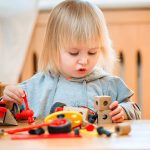
The first birthday gifts that get used in our Montessori gift guide have one thing in common: they give a one-year-old something to do. A child who enjoys putting objects into containers may return to a posting box again and again. For one who loves copying the grown-ups, a child-sized broom might see more use. Start with what the child already reaches for, then pick a gift that lets them try the next small step.
What Makes a Gift a “Montessori” Gift?
Montessori is a way of helping children learn and grow. It is based on the work of Dr. Maria Montessori. The main idea is to see the child as a capable and curious person. The goal is to support their natural desire to learn. For a one-year-old, this does not mean fancy electronic toys. It means simple, purposeful items that help them explore their world.
The Key Ideas Behind Montessori for One-Year-Olds
The American Montessori Society’s guide to Montessori at home suggests offering a small choice of activities within a child’s reach. That is a useful test for first birthday gifts: could this child pick it up, try something and put it back with a little help?
Follow the Child
This means watching what the child is already trying to do. At one year old, they might be pulling themselves up to stand. They might be focused on nesting large stacking cups. A good Montessori gift helps them practice what they are already working on.
Hands are the Tools for Learning
A child’s brain grows by using their hands to explore. They learn about weight, texture, and size by touching things. Gifts made from natural materials like wood, metal, cloth, and glass are best. These materials give the child real information about the world.
Real Work and Independence
Montessori gifts often look like small versions of adult tools. A one-year-old wants to copy what they see you doing. They want to sweep, cook, and take care of themselves. A gift that lets them try these “real” jobs builds their confidence and independence.
Movement is Essential
At this age, children are mastering their bodies. They are learning to crawl, walk, climb, and use their hands with skill. The best gifts support this physical development safely and encourage them to move.
First Birthday Gifts by Interest
If you are in a hurry, here are the main types of gifts that fit the Montessori approach. Each one supports the child’s growth in a specific way.
- Motor Skill Toys: Items like puzzles and stackers that build hand-eye coordination.
- Practical Life Tools: Small brooms, kitchen tools, or dressing frames that let the child help with real tasks.
- Sensory Exploration Items: Objects with different textures, weights, and sounds.
- Books Based on Reality: Books with simple stories and photographs of real objects and animals.
- Movement Equipment: Safe climbing structures or stools that let the child move freely.
Understanding the Montessori One-Year-Old
Before we look at specific gifts, let’s talk about what a child is like at this age. Knowing their skills and interests helps you choose a gift they will truly use.
What a One-Year-Old is Learning to Do
A one-year-old is very busy. They are making huge steps in their development. Their main “work” is to move and explore with their hands.
Physical Development
Most one-year-olds are learning to walk. They can usually stand alone and take their first steps. Their hands are also becoming more skilled. They can pick up a small crumb using their thumb and finger. This is called the pincer grasp. They love to put things in containers and dump them out again.
Mental and Social Development
Their understanding of language is growing fast. They can often follow a simple command like “bring me the ball.” They start to use gestures like waving “bye-bye.” They are deeply interested in cause and effect. They learn that if they push a button, something happens. In Montessori, we prefer they learn this with simple, physical objects, not electronics.
Montessori First Birthday Gifts for Everyday Play
Now, let’s explore specific gift ideas. Each gift is chosen because it supports one or more of the key Montessori ideas we discussed.
Gifts for Developing Motor Skills
These gifts help a child practice using their hands and fingers with purpose. This fine motor skill development is crucial for future tasks like writing.
Wooden Puzzles with Knobs
A simple wooden puzzle with just a few pieces is perfect. The knobs on each piece are designed for a child’s small hand. They help the child practice the pincer grasp. Choose puzzles with realistic images, like a dog, a car, or an apple. This helps the child connect the puzzle to the real world.
Stacking and Nesting Toys
Stacking cups or wooden rings are classic for a reason. The child learns about size, sequence, and balance. They can stack them up or nest them inside one another. This is a clear lesson in cause and effect. It also helps their hand-eye coordination as they carefully place one piece on another.
Shape Sorters and Object Permanence Boxes
A shape sorter challenges a child to problem-solve. They have to find the right hole for each shape. An object permanence box is a special Montessori item. The child drops a small ball into a hole in the top of a box. The ball rolls out through a small door or ramp. This teaches the child that even when something is out of sight, it still exists. This is a very important mental concept.
Gifts for Practical Life Skills
These are some of the most loved gifts in a Montessori home. They allow the child to feel like a capable part of the family.
A Learning Tower
A Learning Tower is a safe stool with railings that lets a child stand at counter height. This is a fantastic gift for independence. The child can stand at the kitchen sink to wash their hands. They can help an adult prepare food. They can see what is happening and feel included. This turns boring daily routines into exciting opportunities for learning and connection.
Child-Sized Cleaning Tools
A small broom, a dustpan, and a little brush let the child help with cleaning. When they spill something, they can learn to help clean it up. This is not a punishment. It is a way to give them responsibility and show them they are a helpful member of the home.
Real Weaning and Mealtime Tools
Instead of plastic plates and sippy cups, consider small versions of real items. Small glass cups (which are surprisingly sturdy), a small ceramic plate, and real metal utensils are great gifts. Always used with adult supervision, these tools teach the child to handle materials with care. They learn true drinking skills from an open cup. This respects their ability to learn complex tasks.
Gifts for Sensory Exploration
Sensory play helps a child’s brain make connections. It builds nerve pathways and helps them learn about their environment.
Play Silks
A simple, large piece of silk cloth is a wonderfully open-ended gift. It can be a cape, a peek-a-boo blanket, a river on the floor, or a bed for a doll. The smooth, flowing texture is pleasing to touch. It encourages imagination in a way that a single-purpose toy cannot.
Sensory Bins
For a child who likes taking things out and putting them back, try a shallow basket with a textured washcloth and a set of large, one-piece nesting cups rated for their age. Sit together and explore what fits inside what. The CPSC toy safety guide explains age labels and small-parts hazards.
Music and Sound Makers
Simple instruments like a small drum, a shaker, or a xylophone help a child explore sound and rhythm. They learn that their actions create sounds. This is another lesson in cause and effect.
Gifts for Encouraging Movement
Safe movement is a cornerstone of Montessori. These gifts help a child practice their large motor skills with confidence.
A Pikler Triangle
A Pikler Triangle is a small climbing frame made of wood. It is designed for very young children to safely pull up, climb, and explore their physical limits. It supports a child’s natural desire to climb and helps them develop coordination, balance, and confidence in their own bodies.
A Pull Wagon or Walker
A sturdy wagon that a child can push or pull is excellent for a new walker. It gives them support and helps them practice walking. They can also use it to carry their toys from one room to another, which is a practical life activity in itself.
What to Avoid in a Montessori Gift
Knowing what not to buy is just as important. Here are the types of toys that do not fit the Montessori approach for a one-year-old.
Toys with Batteries and Electronics
Toys that flash, beep, and talk for the child do most of the thinking for them. The child becomes a passive observer. In contrast, a simple wooden toy requires the child to be the thinker and the mover. It fosters active, not passive, play.
Toys Based on Fantasy
For a one-year-old who is just learning about the world, it is best to focus on reality. Choose books with photos of real animals, not talking cartoon animals. This helps them build an accurate understanding of their environment. Fantasy and imagination play will come later, naturally.
Too Many Toys or Overstimulating Toys
A room full of toys can be overwhelming for a child. It can make it hard for them to focus on one task. Montessori spaces are calm and orderly. It is better to have a few, well-chosen toys available at a time. Rotate them to keep the child’s interest.
Your Guide to Choosing the Perfect Gift
With so many good options, how do you pick just one? This simple process will help you make a choice you can feel great about.
Step One: Observe the Child and the Home
Think about the child. What do they love to do right now? Are they always trying to climb onto the sofa? A Pikler triangle might be perfect. Do they watch you intently while you cook? A Learning Tower would be a hit. Also, think about the family’s space. A large climbing structure may not work in a small apartment, where a set of beautiful stacking cups would be ideal.
Step Two: Prioritize Quality and Safety
Montessori gifts are an investment in quality. Look for items made from solid wood with non-toxic finishes. Check that there are no small parts that could be a choking hazard. Well-made toys are not only safer but also last longer and can often be passed down to other children.
Step Three: Value Simplicity and Purpose
When in doubt, choose the simpler gift. A set of four wooden rings to stack is often better than a complicated electronic activity center. The simple gift has a clear purpose and allows the child’s own mind to be the engine of play.
Common Questions About Montessori Gifts
You might still have some questions. Here are clear answers to the most common ones.
Do Montessori gifts have to be very expensive?
No. A familiar board book, a child-sized washcloth for helping at the sink or a pair of nesting cups can all make thoughtful first birthday gifts. Ask what the family already has before buying anything.
The parents are not strictly Montessori. Will they like these gifts?
Yes. These gifts are appreciated by almost all parents because they are thoughtful, well-made, and support development. A beautiful wooden puzzle or a set of stacking cups is a classic gift that any child can enjoy and benefit from.
Is it okay to give a stuffed animal?
A simple, well-made stuffed animal of a real creature, like a dog or a bear, can be a lovely comfort object. It is best to avoid unrealistic fantasy creatures. The child can learn the name of the animal and connect it to the real world.
A Final Thought on Your Gift
If you are choosing between two first birthday gifts, picture a specific moment in the child’s day. Would they reach for the cups at bath time or bring a book to a grandparent after lunch? For more examples, our guide to learning toys for one-year-olds groups toys by the kind of play a child already enjoys.